
Puente Francisco Eduardo Tresguerras
A journey through the history, legend, and charm of Celaya.
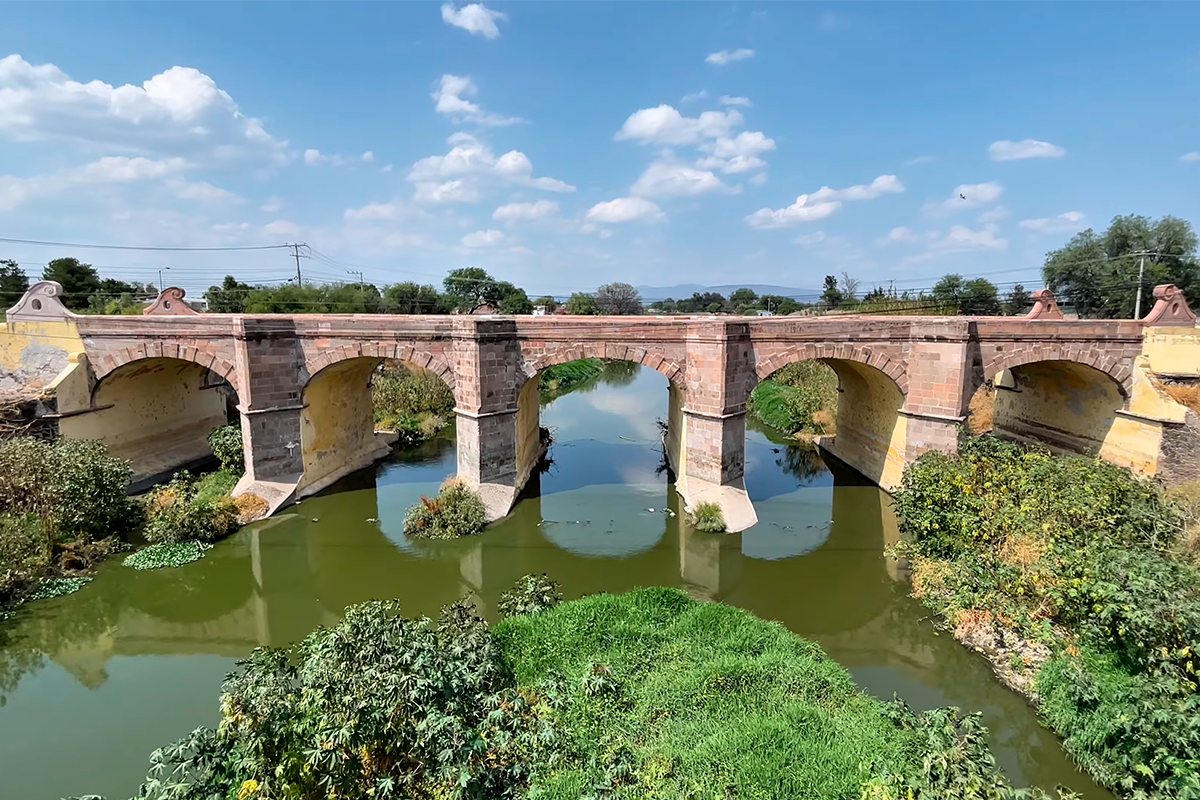
T The Tresguerras Bridge in Celaya is located over the Laja River, next to the Querétaro-Celaya federal highway. It was inaugurated on August 15, 1809, and built by the architect Francisco Eduardo Tresguerras.
Originally, it was called the Tepalcates Bridge, but later it became known as the Cinco Ojos Bridge, and today it bears the name of the architect.
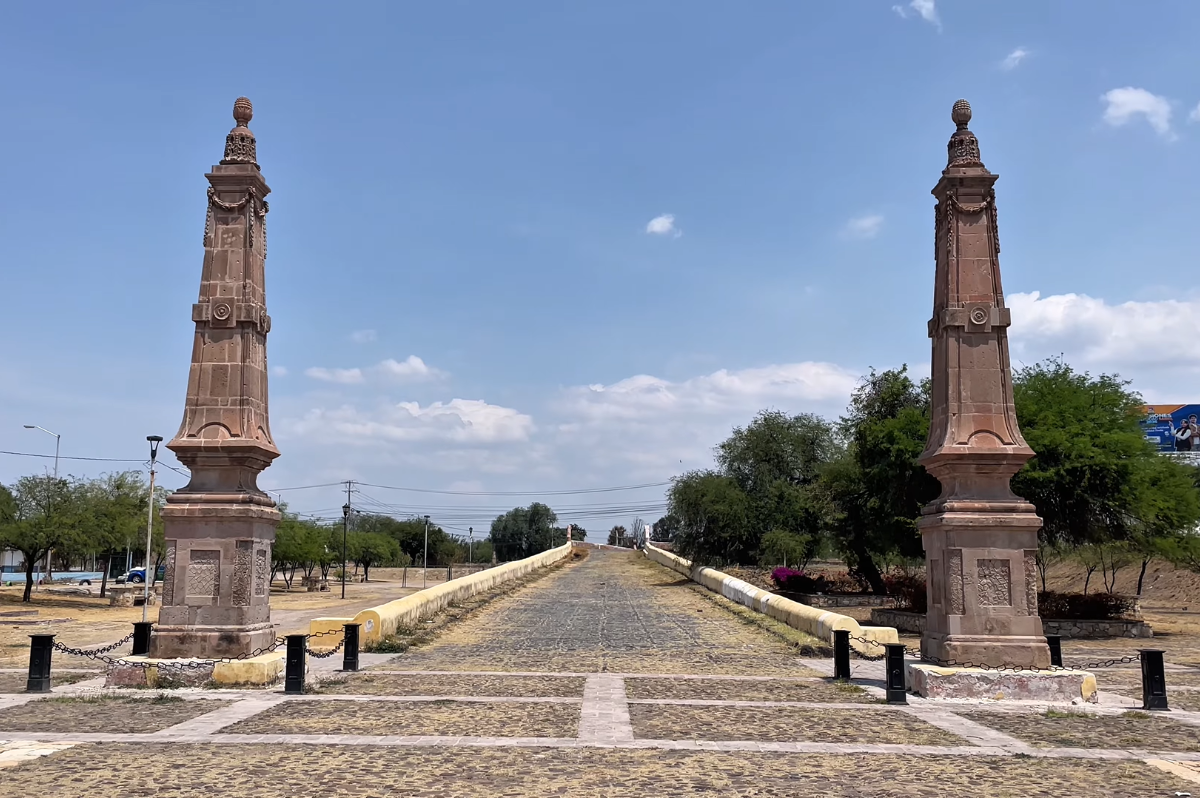
It consists of five flattened arches on pilasters that end with a cornice and a protective parapet. At the ends, there are decorative borders around an oculus, stone pillars, and stone moldings. The bridge has a neoclassical style.
Its origin dates back to 1803, when the people of Celaya learned that the viceroy, José de Iturrigaray, would pass through Celaya on his way to Guanajuato and cross the Laja River. They asked for permission to auction the bullfighting silver to the highest bidder and use the funds to build the bridge.
It was built as part of the ’Silver Route’ to allow muleteers to transport materials from Guanajuato or Zacatecas to Mexico City. The Silver Route was part of the Camino Real Tierra Adentro, established during the Viceroyalty of New Spain in the 16th century, with the aim of transporting silver extracted from mines and fulfilling the tribute to the King of Spain known as the ’royal fifth.’
In commemoration of the bridge’s inauguration, the tradition of the Romería to the Laja River takes place. It is traditionally celebrated every August 15, and over the years it has become a meeting point for families to enjoy the river’s flow and participate in cultural activities.
This structure is also accompanied by a tragic tale known as ’The Chained Woman of the Tresguerras Bridge.’ The legend tells the story of a woman with her two children, who on a rainy night tried to cross the river. Without realizing the strong current that was growing by the minute, the water swept the woman away from her children, and she wasn’t able to save them. Devastated by grief and guilt, the woman chained herself and threw herself from the highest point of the bridge.
They say that on cold nights when the river swells and the rain intensifies, you can hear wailing and chains being dragged.